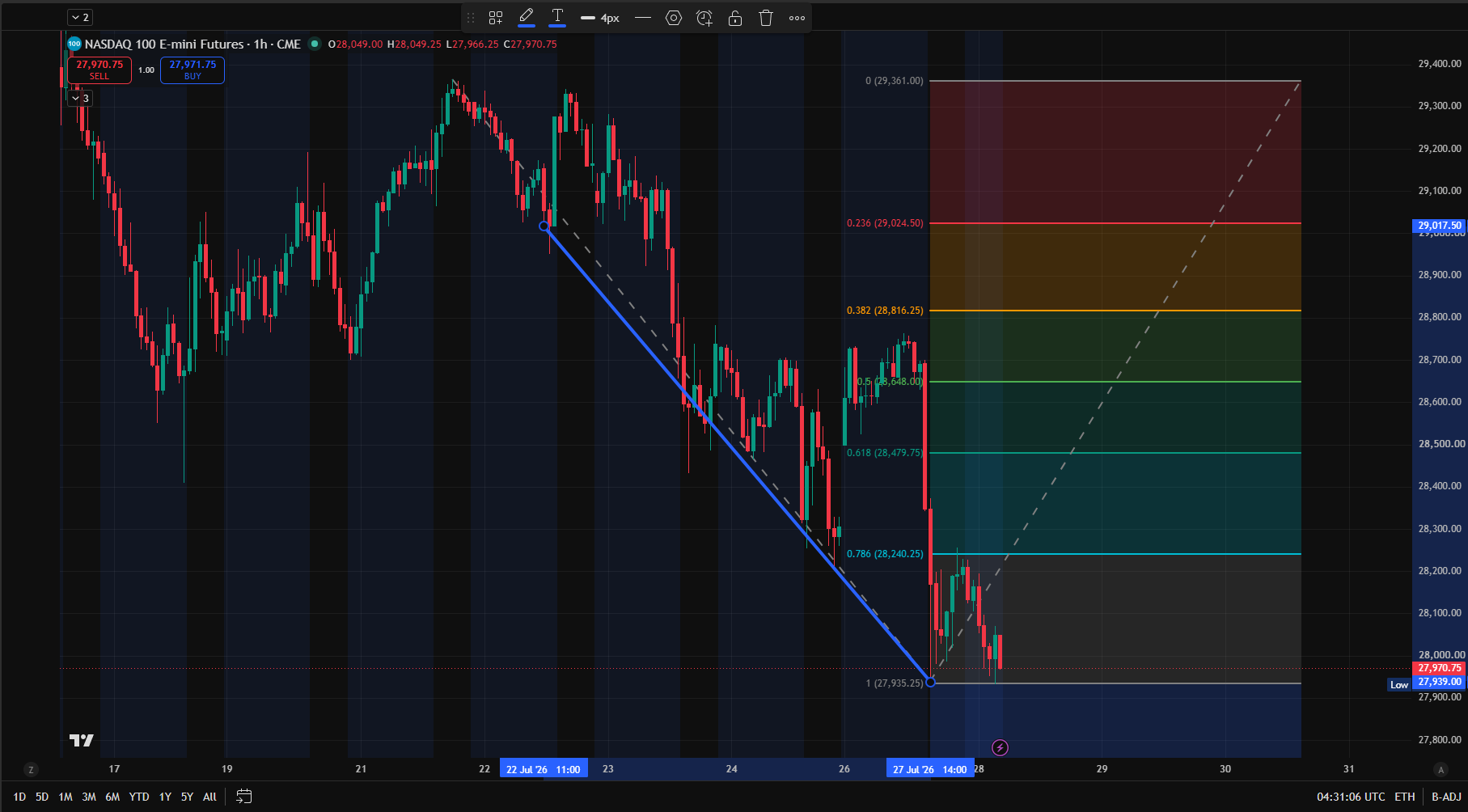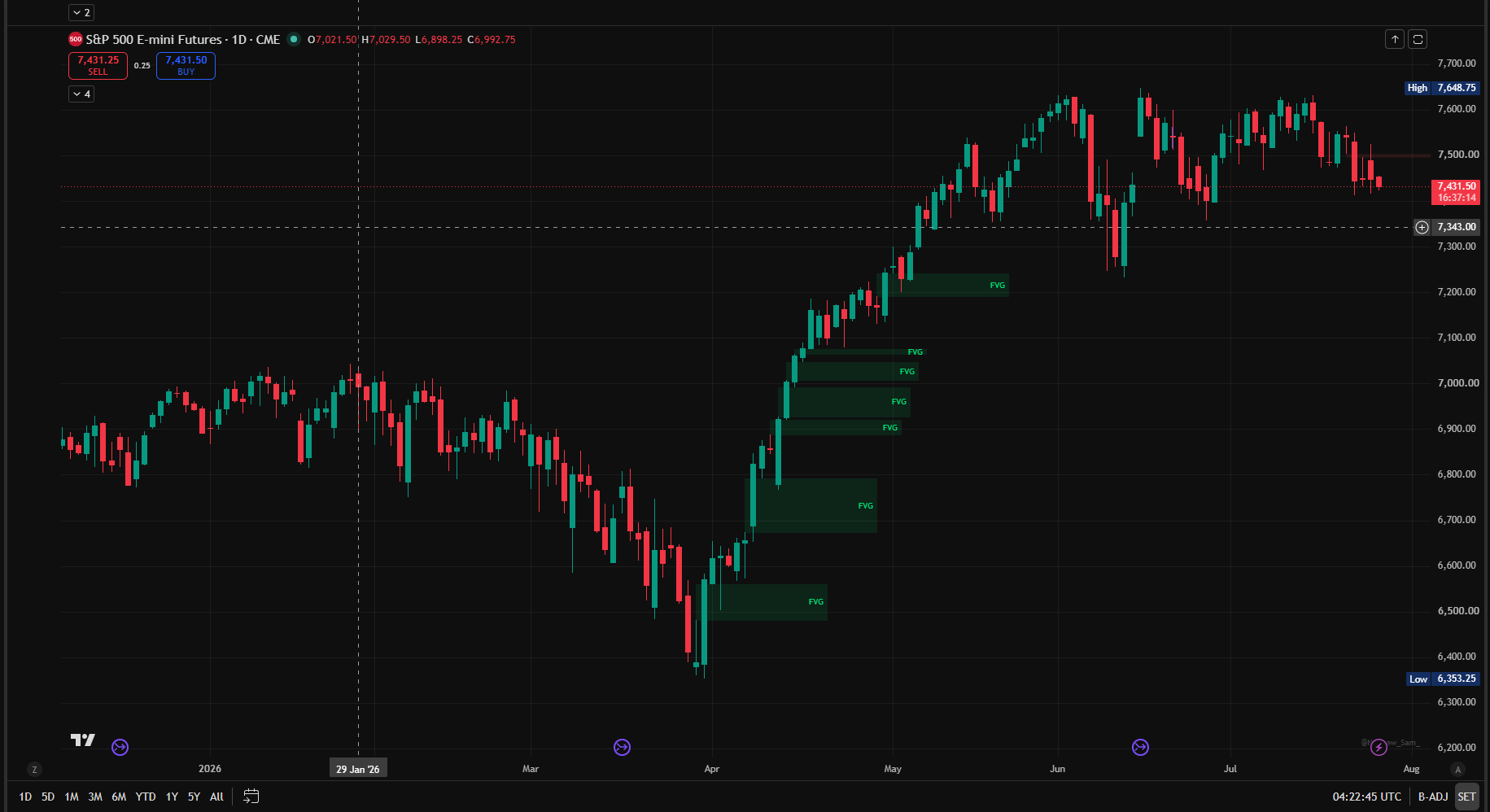
A Fair Value Gap (FVG) is one of the most powerful yet underappreciated concepts in technical analysis. Understanding what creates Fair Value Gaps and why price reacts to them can dramatically improve your ability to anticipate market moves.
What Is a Fair Value Gap?
A Fair Value Gap is a gap in price that appears when price moves rapidly without normal buying or selling activity filling the space in between. It creates an unfilled area on the chart where no transactions occurred.
In simpler terms: price jumped from point A to point B without processing all the orders in between. That untouched area is the Fair Value Gap.
Why Price Creates Fair Value Gaps
Fair Value Gaps form when market conditions change rapidly—usually due to economic news, earnings announcements, or sudden shifts in sentiment. Price moves aggressively in one direction, leaving a gap in the market structure.
Why Traders Care About Fair Value Gaps
Professional traders care about Fair Value Gaps because they represent inefficiency in the market. Price will often return to fill these gaps as the market re-equilibrates and traders who missed the initial move attempt to enter positions.
Think of it this way: if you’re at a party and everyone suddenly moves to another room, you might follow to understand what’s happening. Similarly, price often returns to fill the gap to establish “fair value” for the asset.
Where Does Price Fill Fair Value Gaps?
Fair Value Gaps are typically filled when:
Profit-taking occurs: After an aggressive move, traders take profits and price retraces into the gap.
Market structure shifts: A lower high or higher low forms, and price moves back to fill the gap during correction.
Support or resistance breaks: Price pulls back to fill the gap before continuing in the original direction.
Volatility contracts: After an aggressive move, volatility often decreases and price fills the gap naturally.
How to Use Fair Value Gaps in Your Trading
Identify the gap: Look for rapid price movements with empty space on the chart—no candles filling that space.
Mark it on your chart: Draw a horizontal line at the top and bottom of the gap so you can track when price returns.
Watch for confirmation: Price doesn’t always fill every gap, but when it does, it often does so decisively.
Use as a target: If price is moving away from a gap, the gap becomes a potential target for profit-taking or re-entry.
Combine with other analysis: Fair Value Gaps work best when combined with support/resistance levels, trend structure, and volume analysis.
Fair Value Gaps on Different Timeframes
Fair Value Gaps on daily charts are often more significant than those on 1-hour charts because they represent larger imbalances. However, multiple smaller gaps can also combine to create meaningful resistance or support zones.
Important Caution
Not every gap gets filled, and some gaps take longer to fill than others. A Fair Value Gap that formed weeks ago may eventually fill, but it might take months or never fill at all if the market structure changes significantly.
Never trade a Fair Value Gap in isolation. Use it as one piece of a larger analytical framework that includes price structure, support/resistance, and market context.
Practice Exercise
Pull up a chart and look for gaps created by rapid price movement. Mark them on your chart. Then watch over the next week or month to see:
- Which gaps get filled
- How quickly they get filled
- What type of price action fills them
- Whether the fill happens with the same momentum as the original move
This observation will teach you far more than any explanation.
Final Thoughts
Fair Value Gaps are a natural part of market structure. They represent opportunity for traders who understand why price reacts to them. By learning to identify gaps and understand their role in price movement, you gain insight into how professional traders think about market inefficiency.
SkyVestments content is provided for educational and informational purposes only and is not financial or investment advice. Markets involve risk, and individuals should make their own informed financial decisions.
Educational Disclaimer: SkyVestments content is provided for educational and informational purposes only and is not financial or investment advice. Markets involve risk, and individuals should make their own informed financial decisions.